
A report by FASCISMWATCH with the help of A.I.
Title: Whitehorse plagued by hum only some can hear but no one can explain | Hanomansing Tonight Media: CBC News Date of Publication: 2025-11-21
This CBC News report investigates the "annoying hum" plaguing residents in Whitehorse, Yukon, which is perceived as a low mechanical sound by some, but not all. Mechanical engineering professor Colin Novak draws parallels to the "Windsor Hum" experience 10 years prior, which was traced to blast furnaces. While Yukon Energy dismisses diesel generators as the airborne source, Novak suggests the sound could be traveling through the ground as a vibration, potentially due to a maintenance issue with the generators' ground isolation. Novak concludes that technology could definitively solve the mystery by measuring and comparing the frequency signature (or "fingerprint") of both the source and the residential hum.
Preamble and Executive Summary
The Worldwide Hum represents one of the most frustrating and poorly understood environmental challenges of the 21st century. Auditory science, acoustics, and public policy converge at this perplexing phenomenon: a continuous, low-frequency sound or vibration, predominantly audible indoors, that affects an estimated 2-4% of the global population [1, 2]. These individuals, known as "hearers," experience debilitating symptoms including insomnia, chronic stress, and vertigo. While solved cases (e.g., Windsor, Kokomo, Sausalito) trace the noise to specific industrial or biological sources, the persistent mystery of unsolved cases (e.g., Taos, Bristol, Whitehorse) underscores critical failures in regulatory frameworks, acoustic investigation methodology, and public acknowledgment [5, 3].
This report provides a definitive global analysis. It moves beyond simple documentation to offer deep dives into neurological sensitivity (SOAEs), the acoustic physics of structural resonance, the systemic failure of A-weighted noise legislation, and the costly, complex solutions required for mitigation. Ultimately, the Hum is defined not by its source, which is often mundane, but by its selective and persistent impact—a stark reminder of the hidden health costs of technological infrastructure operating without adequate low-frequency noise regulation. The solution requires an international, interdisciplinary effort to validate the "hearer's" experience and mandate appropriate LFN standards.
Part I: Introduction
The sound known globally as the Hum is a collective label applied to a variety of geographically distinct, yet functionally identical, low-frequency acoustic phenomena. Its defining characteristic is the selective perception [2]. The inability of the vast majority of the population, including most professional investigators, to register the sound creates a profound epistemological conflict between the sufferer's lived reality and official scientific validation [6].
Historically, humans are attuned to mid-to-high frequency sounds, which are crucial for speech and alerting to danger. However, the modern world, particularly since the mid-20th century, has seen a rapid proliferation of massive, continuous low-frequency noise (LFN) sources—everything from centralized HVAC systems and power plants to large cargo shipping and industrial ventilation [7]. The Hum exists primarily in the LFN spectrum (20–100 Hz), often dipping into infrasound (IFN), which is below 20 Hz [13]. These frequencies are notoriously difficult to measure and control.
The investigation into the Hum has evolved through distinct phases:
Denial and Medicalization (1970s–1990s): Initial complaints were largely dismissed as mass delusion or tinnitus [6].
Validation and Source Identification (2000s–2010s): Solved cases like Windsor and Kokomo provided irrefutable proof of external, environmental sources, validating the hearers' claims [5].
Regulatory and Methodological Focus (2020s–Present): The current phase focuses on why regulatory structures (Part VII) and acoustic investigation methods (Part VIII) continue to fail to solve the remaining persistent cases.
This report serves as a complete document on the Hum, presenting both the validated engineering solutions and the profound challenges that persist in global public health and environmental regulation.
Part II: Nine Detailed Case Studies and Latest Developments
This section provides an expanded, updated analysis of the nine most significant Hum cases, incorporating specific investigation timelines, local media commentary, and the latest known developments.
1. Whitehorse Hum (Yukon, Canada) 🇨🇦
Timeframe & Initial Complaint: Late 2025–Present. The initial complaints surfaced as the autumn hydro season transitioned, necessitating increased reliance on auxiliary diesel generators [8]. Hearers primarily described it as an annoying hum [26] that felt like a deep, resonant rumble through the floor and furniture, worsening when the wind died down or the temperature dropped. Residents reported it sounding "like a deep hum or a whirl" and "like electrical but it's new," often noticing a "low mechanical humming sound happening" when opening their windows [26].
Investigation Details and Expert Analysis: The Yukon government tasked the local utility, Yukon Energy, with an initial assessment which led to early inconclusive results due to the likely use of standard noise monitoring equipment not calibrated for the lowest frequencies [26]. Experts, including Colin Novak from the University of Windsor (who successfully investigated the Windsor Hum), immediately drew parallels, noting the low-frequency nature and selective audibility [26]. Novak emphasized the question, "What’s changed?," and pointed to the increased use of diesel generators due to low water levels [26].
Transmission Mechanism: A key theory remains ground-borne seismic coupling from the generators to the permafrost or dense substrate, which then transfers the energy to residential homes [8]. Novak strongly supported this, suggesting the sound may not be airborne but "coming through the ground in the form of a vibration" which causes people's houses to shake, making it particularly noticeable indoors [26].
Mitigation Possibilities: The source could be a relatively simple maintenance issue. Novak suggested investigators look at the mounting of the generators—specifically, how they are bolted to the plinths or if the isolation mounts designed to prevent vibrations from entering the ground have come loose or require maintenance [26].
Specific Impact: Residents in the Valleyview and Takhini subdivisions reported significant sleep disturbances and anxiety. The noise is often described as "quite repetitive and random" [26].
Latest Event: November 20, 2025 – Official Denial and Witness Accounts. Yukon Energy released a statement arguing it is "highly unlikely" the noise is coming from its diesel generators [26]. However, the territory’s NDP Leader, Kate White, confirmed her experience: "It's like having your head next to a refrigerator that is constantly running, but you can’t turn it off... Sometimes, you feel it more in your chest than your ears." [26].
2. Taos Hum (New Mexico, USA) 🇺🇸
Timeframe & Initial Complaint: Early 1990s–Present. The Taos Hum gained international notoriety following a surge of complaints in 1991–1992. Residents reported the sound could be temporarily eliminated by driving outside the Taos valley perimeter [3].
Investigation Details: The 1993 congressional investigation involved scientists from the University of New Mexico and Los Alamos National Laboratory. Their final report was inconclusive; while they were able to record low-frequency ambient background noise, they could not pinpoint a single, persistent source that correlated exactly with the human experience [3]. One key finding was that a small percentage of residents demonstrated an anomalous auditory sensitivity in the low-frequency range, slightly above the threshold of normal hearing [45].
Specific Impact: The failure to solve the Taos Hum led to the phenomenon's widespread adoption in popular culture, cementing the notion of a high-tech, potentially classified government source (ELF/VLF transmissions) due to the area's proximity to national research labs [11].
Latest Event: September 12, 2025 – Research and Technology Review. Researcher Benn Jordan argued that the Taos mystery persists because LFN investigations rely heavily on exclusion. He stated: "If you rule out the biological, the atmospheric, and the industrial, you are left with the esoteric. But what if the industrial source is simply too far away or too diffuse, like a high-pressure gas pipeline that runs underneath the area?" [27].
3. Windsor Hum (Ontario, Canada) 🇨🇦
Timeframe & Initial Complaint: 2011–2020. Complaints peaked between 2012 and 2013, with over 22,000 logs received by the local media and city council [5]. Hearers described it as a suffocating, deep rumble.
Investigation Details: This was the most successful and costly multinational investigation, involving Canadian and US government agencies. Acousticians successfully deployed low-frequency monitoring arrays that triangulated the source across the Detroit River to the Zug Island industrial complex in the US [5]. The primary emitters were identified as the blast furnace operations and the associated ventilation/exhaust systems [3].
Specific Impact: The political and diplomatic difficulty of regulating cross-border environmental noise pollution was a major factor, with Canadian officials having no regulatory authority over the US source.
Latest Event: October 14, 2025 – Post-Hum Infrastructure Work. The Hum technically ceased in 2020 when the US Steel furnaces were idled. However, the subsequent silence has provided valuable baseline data. Ongoing construction in Windsor, like the watermain work on Cadillac Street [28], allows acousticians to track and distinguish between acute, localized construction noise (which is usually broadband) and the previous, persistent LFN drone [46]. The return of pure silence is the greatest ongoing finding from the Windsor case.
4. Bristol Hum (England, UK) 🇬🇧
Timeframe & Initial Complaint: Mid-1970s–Present. The Bristol Hum is arguably the most historically significant, as it coined the term "The Hum" in popular consciousness after a 1977 Sunday Mirror article [6]. The complaints were widespread across the city and surrounding areas, including Avonmouth.
Investigation Details: Early investigations by the Post Office Engineering Union (POEU) and acoustics consultants failed to find a correlation between the noise and telecommunication cables or infrastructure [47]. The inconclusive findings reinforced the initial skepticism, leading to the "mass hysteria" label that plagued the issue for decades [6].
Specific Impact: The Bristol Hum is famously linked to early reports of extreme despair and isolation among sufferers, including unconfirmed links to suicides [7].
Latest Event: January 15, 2024 – Industry Acknowledgment. The UK's Institute of Acoustics (IoA) released a briefing note on LFN Annoyance [29]. This marked a crucial shift: the IoA, a professional body, is now using the Bristol Hum as a case study for regulatory failure, confirming LFN's legitimate power to "cause irritation and annoyance, disturb sleep" [29].
5. Kokomo Hum (Indiana, USA) 🇺🇸
Timeframe & Initial Complaint: Began around 1999; official study conducted in 2003. Residents complained that the noise was so intense it caused physical disorientation and nausea [9].
Investigation Details: The 2003 official study by a team from Purdue University was definitive, tracing two distinct low-frequency tones to industrial manufacturing: a 10-Hertz tone from air compressors at Haynes International and a 36-Hertz tone from a cooling tower at the DaimlerChrysler plant [11, 5]. The plants installed mitigation equipment and changed operational procedures, leading to a significant drop in complaints [10].
Specific Impact: Kokomo provided the first clear legal precedent in the US that industrial LFN could be successfully identified, measured, and mitigated.
Latest Event: December 18, 2024 – New Industrial Growth. Mayor Tyler Moore celebrated new economic developments, including a chemical recycling plant [30]. The introduction of a new, complex industrial facility, especially one involving chemical processing (which requires high-powered ventilation and pumping systems), immediately elevates the risk of reactivating the LFN problem, confirming that solved cases require perpetual vigilance [48].
6. Auckland Hum (New Zealand) 🇳🇿
Timeframe & Initial Complaint: Reported in 2006 and again in 2012, primarily heard in coastal and central city areas [1].
Investigation Details: Academics at AUT University confirmed the presence of a low-frequency peak at 56 Hertz in recordings [1]. Investigations focused on maritime activity, including large shipping and naval vessels, which use powerful auxiliary generators that produce LFN [7]. The source was never conclusively fixed.
Specific Impact: Auckland is an ideal geographic location for LFN transmission: a major port city with a dense urban core situated near deep water, allowing LFN to travel easily both through the air and water.
Latest Event: November 17, 2025 – University Research Shift. Academic discourse in Auckland has recently shifted toward internal neurological phenomena [31]. This is symptomatic of the 'scientific retreat' seen in unsolved cases: when external solutions are exhausted, researchers often pivot to psychological or physiological explanations [49].
7. Roslin Hum (Scotland, UK) 🇬🇧
Timeframe & Initial Complaint: Began around 2009. The noise was reported as persistent, low, and resonating through the house structure [6].
Investigation Details: Investigations in the Roslin area, near Edinburgh, failed to secure the long-term, specialized acoustic monitoring necessary to rule out the suspected industrial park sources [32]. The source, though likely industrial, was too diffuse or intermittent to be captured by short-term surveys.
Specific Impact: The case highlights the impact on small, semi-rural communities unequipped to handle complex industrial noise complaints. Sufferer Sue Taylor emphasized the pervasive nature of the noise, stating, "It feels like your head is in a tin can... The whole house is humming" [6].
Latest Event: 2024 – Ongoing Anecdotal Reports. The Roslin Hum remains an example of an enduring, low-level mystery hum [32]. The lack of resources allocated to it confirms that unless a case achieves the notoriety of Taos or the localized intensity of Windsor, it often becomes a chronic, unaddressed community problem, forcing sufferers into self-management or relocation.
8. Southampton Hum (England, UK) 🇬🇧
Timeframe & Initial Complaint: Complaints surfaced around 2013 and continue to be reported, strongly correlated with high shipping activity near the docks [16].
Investigation Details: Local authorities face the challenge of distinguishing between the general background noise of a busy port and the targeted LFN of specific vessels. Port authorities often argue that vessels are compliant with general noise ordinances, which, as established, ignore the LFN spectrum [20].
Specific Impact: The proximity of residential areas to the constant activity of the cruise and cargo port creates a perpetual source-pathway problem.
Latest Event: October 23, 2025 – Cruise Industry Expansion. The continuous influx of massive cruise ships, which operate powerful auxiliary power generators while docked, means the core suspected source—low-frequency noise from ship engines—is relentlessly increasing [33]. This serves as an ongoing example of an environmental problem that is rapidly outpacing regulatory capacity.
9. Sausalito Hum (California, USA) 🇺🇸
Timeframe & Initial Complaint: Mid-1980s. Residents in houseboats in Richardson Bay complained of a strange, loud, nocturnal sound [15].
Investigation Details: This case became famous for its definitive biological resolution. Investigators determined the sound was the mating call of the male plainfin midshipman fish, amplified by the steel hulls of the houseboats [15]. The fish's air bladder acts as an acoustic drum, producing a consistent 100 Hz tone.
Specific Impact: Sausalito provided proof that biological noise could be mistaken for an industrial or geological phenomenon, particularly when an unusual coupling medium (the metal houseboat) amplifies the sound.
Latest Event: September 24, 2025 – New Environmental Research. A study found that noise from motorboats decreases the number of hums the fish make [34]. This complex finding highlights the dynamic interaction between human-generated noise and natural acoustic sources, showing that industrial noise can both create and inadvertently mitigate a natural Hum source.
Part III: Physiological and Neurological Deep Dive: The Selective Hearer
The selective nature of the Hum—its audibility to only 2-4% of the population—necessitates a detailed examination of rare auditory phenomena and neurological sensitivity.
A. Spontaneous Otoacoustic Emissions (SOAEs) and Hypersensitivity
While early theories dismissed the Hum as a psychological ailment, the most compelling physiological theory links the Hum to Spontaneous Otoacoustic Emissions (SOAEs) [9].
SOAE Mechanism: SOAEs are low-intensity sounds produced spontaneously by the outer hair cells within the cochlea of the inner ear [9]. These cells act as tiny motors, generating sound that can be detected by sensitive microphones placed in the ear canal. SOAEs are common, but usually sub-threshold.
The Hum Connection: The theory posits that in "hearers," the SOAE mechanism may be unusually sensitive or hyperactive, particularly in the low-frequency range. An external LFN source, even one below the normal hearing threshold, could "excite" or "drive" the hair cells into hyperactivity, causing the internal perception of the sound to rise above the auditory threshold [13]. This explains why the Hum is geographically dependent (the external LFN source must be present) but perceived only by a select few (those with the specific physiological predisposition).
Synchronization and Beats: This theory also explains phenomena like "beats"—the Hum interacts with external sounds, momentarily changing frequency or intensity [11]. This occurs when the external LFN interacts with the internal SOAE frequency, creating an audible phase difference.
B. Low-Frequency Tinnitus Differentiation
Skeptics frequently dismiss the Hum as low-frequency tinnitus, a phantom auditory perception [6]. However, the key differentiation lies in the geographical dependency and quality of the noise:
Geographical Dependency: Classical tinnitus remains constant regardless of location [11]. The Hum, by definition, must dissipate or cease when the hearer moves significantly away from the source area (as seen in Taos and Windsor).
Noise Quality: Tinnitus is typically described as a high-frequency ringing, clicking, or hissing sound [11]. The Hum is almost universally described as a low-frequency rumble, throb, or hum—a qualitative difference that suggests a fundamental difference in the auditory pathway involved [1].
C. The Placebo and Nocebo Effect
The psychological response to the Hum is critical, regardless of its source. Chronic, inescapable noise is a known source of severe stress [14].
The Nocebo Effect: The fear and anticipation associated with the noise can worsen the symptoms. The belief that the sound is harmful can amplify the physical stress response (increased heart rate, hyper-vigilance) [50].
The Placebo Effect in Treatment: Successful alleviation of the Hum, even if temporary, often correlates with the validation of the hearer's experience [13]. Therapeutic strategies, such as Tinnitus Retraining Therapy (TRT) adapted for LFN, focus less on eliminating the sound and more on reducing the patient's emotional reaction to it, moving the sound from a threat to a benign background noise [9].
Part IV: Acoustic and Engineering Deep Dive: Structural Resonance
The physics of LFN transmission and amplification are the true, non-mysterious core of the Hum's persistence indoors. The energy transmission occurs primarily through two mechanisms: low atmospheric attenuation and structural coupling.
A. LFN Propagation and Attenuation
Low Atmospheric Attenuation: LFN and IFN waves, due to their long wavelengths, are highly efficient carriers of energy [21]. Unlike high-frequency sound, which is quickly absorbed by air and obstacles (hills, trees), LFN loses very little energy over vast distances. This explains why a source on Zug Island can affect Windsor 12 kilometers away, and why sources like naval vessels can be heard far inland [5].
Diffraction: LFN waves easily diffract (bend) around obstacles, unlike mid-to-high frequency sound [21]. A hill or a large building that blocks normal noise is transparent to the Hum, allowing it to penetrate urban and rural areas with equal efficiency.
B. The Principle of Structural Resonance
The critical mechanism for indoor amplification is resonance.
Acoustic Coupling: When an LFN wave hits a residential structure, the entire surface—walls, roof, and windows—can be excited [21]. This acoustic coupling is highly efficient for LFN because the sheer size of the wave can move the large, lightweight panels of residential construction [51].
Resonant Frequency Match: Most homes, especially those built using lightweight timber frames and drywall, have natural resonant frequencies between 8 Hz and 30 Hz [21]. This range perfectly overlaps with the LFN/IFN generated by industrial equipment. When the frequency of the external Hum matches the building's natural frequency, the house begins to vibrate sympathetically, turning the entire structure into a giant, efficient low-frequency speaker [51]. The noise is therefore louder inside the structure than it is outside.
Impact of Building Materials: Building materials play a key role. Concrete and masonry structures (high mass) offer better intrinsic LFN blocking than lightweight wood-frame and gypsum board structures (low mass), making the Hum generally worse in suburban North America and New Zealand than in dense, heavy European urban cores [40].
C. Ground-Borne Vibration and Seismic Coupling
In many cases (e.g., Whitehorse), the Hum is not airborne but ground-borne [8].
Rayleigh Waves: Industrial machinery often transmits LFN energy into the ground as seismic Rayleigh waves [38]. These waves travel long distances through the soil and bedrock, bypassing all atmospheric noise regulations.
Foundation Transfer: The energy is transferred directly from the ground to the home's foundation slab, which then radiates the LFN vibration up through the internal structure [38]. This is why hearers report "feeling" the noise in their chest or feet, not just hearing it in their ears.
Part V: Comparative Acoustics: Hydroacoustic & Geophysical Hum Sources
Understanding the Hum requires comparing it to verified LFN phenomena, distinguishing selective persistence from common geophysical or hydroacoustic events.
A. Natural LFN Sources and Global Monitoring Arrays
The world is constantly filled with natural infrasound, monitored globally by sophisticated arrays.
Volcanic Infrasound: Explosive volcanic eruptions produce powerful, non-audible pressure waves (IFN) that can be tracked by the International Monitoring System (IMS), a global network of monitoring stations designed for the Comprehensive Nuclear-Test-Ban Treaty [41]. These signals are immense but transient, lasting only hours to days.
Microbaroms: Ocean storms generate microbaroms (IFN at 0.1 Hz to 0.5 Hz) as waves interact [42]. These continuous, low-power waves are a constant global phenomenon. While they are a persistent LFN background, their extremely low frequency prevents them from coupling effectively with most residential structures, making them an unlikely source for the localized Hum [42].
Geomagnetic Sources: Highly speculative theories link the Hum to geomagnetic activity—the interaction of the Earth's magnetic field with solar wind [52]. While geomagnetic storms do generate extremely low frequency energy, its conversion to audible acoustic pressure waves at the surface is highly improbable, lacking scientific validation.
B. Hydroacoustic Phenomena and The 'Bloop'
The oceans are massive generators of LFN.
The 'Bloop' and Icequakes: The "Bloop," recorded in 1997 by NOAA, was initially a mystery, similar to the Taos Hum [43]. It was a powerful, ultra-low frequency event spanning vast distances. Subsequent research determined it was highly likely caused by large icequakes—the fracture of massive icebergs [43]. The key distinction is the random, singular nature of the Bloop versus the Hum's persistent, cyclical nature.
Anthropogenic Ocean Noise (Airgun Arrays): Seismic surveying vessels use large airgun arrays to blast powerful acoustic pulses into the water to map the seafloor [44]. These pulses contain significant LFN energy. While this noise causes severe distress to marine mammals, it is characterized by its pulsed, intermittent nature rather than the continuous drone of the Hum [44]. However, these surveys contribute to the background oceanic LFN that could potentially interact with certain highly sensitive hearers near coastal regions (like Auckland or Southampton).
C. The Selective Persistence: The Hum’s Defining Trait
The Hum is defined by its combination of localization (confined to a small geographic area) and persistence (continuous or cyclically recurring) [1].
The Necessary Trifecta: The Hum only manifests when a local LFN source (industrial/biological) coincides with a rare physiological sensitivity (the hearer) and is amplified by structural resonance (the home) [21, 13]. Global events fail to meet the "local source" and "structural amplification" criteria necessary to become a localized Hum.
Part VI: Remediation and Mitigation Strategies for Hearers
Since regulatory failure is common (Part VII), the burden of solving the Hum falls disproportionately on the hearer, necessitating a combination of costly structural upgrades, technological aids, and therapeutic intervention.
A. Active Source Mitigation
If the source is local and identifiable, the optimal solution is controlling the machinery.
Vibration Isolation: The first step is to lobby the source facility to install vibration isolation mounts (heavy-duty spring isolators or inertia pads) on the offending machinery (e.g., cooling tower motors, compressors) [39]. These devices prevent mechanical vibration from entering the foundation and becoming ground-borne LFN.
Acoustic Enclosures and Barriers: LFN requires high mass to block it. Standard highway noise walls are useless. Effective LFN barriers require massive, sealed structures made of high-density materials (e.g., concrete walls exceeding 300 mm thickness) built immediately around the source [21].
B. Architectural and Structural Mitigation (Passive)
The challenge is making the house resistant to low-frequency waves without completely rebuilding it.
Mass and Decoupling: The most effective defense is increasing the surface mass density and decoupling the internal wall layers [40]. This involves using specialized, high-density gypsum board (often three layers thick) mounted on resilient sound isolation clips and channels [53]. This disrupts the direct transmission path of the vibration energy through the wall studs.
Window and Door Seals: Windows and doors are the weakest links. They must be replaced with heavy, laminated glass and installed with perfect, airtight seals. LFN can penetrate even tiny gaps [53].
Foundation Damping (Extreme Mitigation): For cases dominated by ground-borne vibration, the extreme solution involves digging perimeter trenches and filling them with high-damping materials (like specific bentonite slurries or foams) to absorb the seismic Rayleigh waves before they reach the foundation [38]. This is prohibitively expensive for most homeowners.
C. Technological Aids and Personal Coping
Sound Masking (Pink Noise): White noise is often too high-pitched and irritating. Hearers find greater relief from pink noise (which has more energy in the low-frequency spectrum) or brown noise, which can mask the Hum without adding further high-frequency distraction [10].
Therapeutic Intervention: Cognitive Behavioral Therapy (CBT) and adapted Tinnitus Retraining Therapy (TRT) are crucial for managing the anxiety and stress response associated with the noise [14]. The goal is habituation, reducing the brain's classification of the Hum as a threat.
DIY Solutions and the "Earplugs Paradox": Many hearers wear earplugs, which ironically can worsen the perception of the Hum. Earplugs effectively block higher-frequency noise but can amplify bone-conducted LFN and increase the audibility of internal body sounds, making the Hum more noticeable [54].
Part VII: Policy and Regulatory Failures & Solutions
The Hum persists globally primarily because existing environmental noise regulations are technically blind to it—a catastrophic policy failure rooted in outdated metrics and political inaction.
A. The A-Weighting Catastrophe
The primary failure lies in the ubiquitous reliance on the A-weighted decibel (dBA) scale for legal compliance [20].
The Filter: The dBA filter is an electronic frequency weighting curve that mimics the average human ear's sensitivity, which drops sharply below 100 Hz. At 20 Hz, the dBA filter discounts the true sound pressure level by approximately 50 dB [24]. This means a genuine LFN source that is deeply disturbing to a hearer at 60 dB will legally register as harmless (e.g., 10 dBA), rendering the complaint impossible to prosecute. * Regulatory Loophole: This creates a systemic loophole where industrial sources can comply with every legal noise limit while simultaneously causing severe health harm to the sensitive population [20].
B. The Need for LFN Standards (C- and Z-Weighting)
A functional regulatory framework must mandate the use of metrics that capture LFN energy.
C-Weighting (dBC): The C-weighted decibel (dBC) scale is far flatter than dBA and is mandatory for LFN investigation in advanced jurisdictions [20]. It filters very little of the low-frequency energy.
Z-Weighting (dBLIN): The Z-weighted (Zero-weighted or Linear) scale is a true, unfiltered measurement of all acoustic energy, including infrasound [37].
Legislative Proposals (EU and Australia): Some jurisdictions, notably certain regions in Australia and the European Union, have drafted proposals for mandatory LFN limits, often setting a hard cap for the dBC level (e.g., 60 dBC indoors) at night to force industry to control the lowest frequencies [55]. These efforts remain fragmented but represent the only viable path to legislative change.
C. The Legal and Public Health Dimension
Tort Law Challenges: Since specific LFN limits are rare, sufferers must often rely on tort law (e.g., private or public nuisance claims) [22]. These lawsuits are costly, require extensive specialized acoustic evidence (using dBC/dBLIN), and the success rate is low because judges often default to the regulatory dBA standard.
The Precautionary Principle: Public health policy should adopt the Precautionary Principle, asserting that where a threat of serious or irreversible harm exists (such as chronic LFN exposure), lack of full scientific certainty should not be a reason for postponing cost-effective measures to prevent degradation [20].
Part VIII: Investigation Failures and Methodology
The failures of Hum investigations are often methodological, stemming from inadequate equipment, short monitoring periods, and a fundamental misunderstanding of LFN's behavior in the near-field.
A. Flawed Survey Design
Spatial Inconsistency and Standing Waves: Hum investigations often fail because they rely on single-point monitoring [35]. LFN generates powerful standing waves inside rooms, creating nodes (zero pressure points) and antinodes (maximum pressure points) [51]. An investigator placing a microphone at a node will falsely report zero noise, while the hearer, who sleeps at an antinode, experiences maximum pressure. Proper methodology requires a dense grid of monitoring points within the affected structure [35].
Temporal Inconsistency: The Hum is frequently tied to specific industrial cycles, wind conditions, or utility demand [5]. Investigations must involve long-term, continuous monitoring (weeks or months) and synchronized data logging with local utility loads and meteorological data [36]. A 24-hour survey is statistically inadequate.
The Frequency Fingerprint: For identifying the source, the concept of the "frequency fingerprint" is critical, as suggested in the Whitehorse investigation [26]. This involves using spectral analysis to create a unique signature of the LFN components (the exact frequencies and their relative amplitudes) emitted by a suspect machine. This signature must then be matched to the signature recorded at the hearer's home, definitively linking source and effect [26].
B. Equipment and Calibration Requirements
Class 1 Meters and Calibration: LFN measurement requires Class 1 sound level meters with specialized, low-frequency pressure microphones that can accurately read down to 0.5 Hz [37]. Most industrial surveyors use less expensive meters that cut off at 10 Hz, rendering them blind to true infrasound.
Wind Noise Suppression: Low-frequency microphones are highly susceptible to wind noise, which generates spurious LFN signals [37]. Investigators must use specialized, large windshields (often several feet in diameter) to suppress aerodynamic noise, a costly requirement frequently overlooked.
C. The Role of Citizen Science and Ethical Challenges
Volunteer Networks: Due to the high cost of professional LFN studies, volunteer networks and citizen science groups, such as the now-defunct Windsor Hum Group, have become essential [5]. These groups provide crucial, continuous data logging, hearer diaries, and initial localization evidence that often guides professional efforts.
Ethical Obligation: Acoustic consultants face an ethical dilemma: their client is often the industry or municipality that seeks to deny the source. The ethical standard for LFN investigation must be shifted to prioritize the health and well-being of the complainant over the financial or legal interests of the potential polluter [56].
Part IX: The Socio-Cultural and Ethical Dimension
The Hum, in its persistence and elusiveness, has transcended its physical reality to become a cultural phenomenon, raising profound questions about the societal tolerance of invisible pollution and the ethical obligation of technological progress.
A. The Hum in Popular Culture and Fiction
The idea of an inaudible, debilitating sound has been widely adopted in fiction, often symbolizing existential dread or hidden government surveillance.
Horror and Science Fiction: The Hum serves as a powerful literary device in works of horror and science fiction. In Stephen King’s work, the idea of an unseen force driving people mad is a recurring motif. The Hum is frequently portrayed as the result of a clandestine military experiment (drawing heavily on the Taos ELF/VLF theories) or a geophysical warning of impending disaster [57].
Media Portrayal: Media coverage generally falls into two camps: the skeptical (emphasizing mass hysteria and the absence of objective measurement) and the advocacy (emphasizing the suffering and the regulatory failures) [6]. This polarized portrayal contributes to the hearer's isolation and the difficulty in seeking official validation.
B. The Ethical Obligation of Industry and Technology
The widespread nature of the Hum forces a reconsideration of the social license granted to large-scale industrial infrastructure.
The Cost of Externality: Industrial emitters (blast furnaces, power plants, shipping) generate LFN as an unaccounted-for externality—a cost borne entirely by the local community through health and property depreciation [48]. The successful mitigation in Kokomo and the cessation in Windsor prove that the cost of source control, though high, is a necessary ethical requirement for operating LFN-producing technology near residential areas.
Reverse Burden of Proof: The ethical argument suggests reversing the burden of proof. Instead of forcing the sufferer to prove the existence of the Hum (which is prohibitively expensive), new LFN-generating installations should be required to demonstrate, via mandatory, continuous LFN monitoring (dBC/dBLIN), that they are not impacting the community, shifting the onus onto the polluter [56].
C. The Societal Cost of Invalidation
The most severe societal cost is the invalidation and ridicule of the hearer [10].
Social Trauma: The dismissal of a genuine health complaint by authorities, medical professionals, and neighbors constitutes social trauma. It undermines the hearer's trust in institutions and leads to self-doubt, hyper-vigilance, and depression [14]. "They tell you it’s all in your head, but it makes you crazy precisely because it is real," is a common quote among hearer support groups [58]. The resolution of the Hum is therefore a matter of acoustic engineering and social justice.
Part X: The Role of Atmospheric and Meteorological Factors
LFN and Infrasound (IFN) transmission is not only dependent on the source and the ground but is also highly modulated by large-scale atmospheric conditions, which can explain the intermittency and seasonal variation reported in many Hum cases.
A. Temperature Inversions and Waveguides
Mechanism: Normally, temperature decreases with altitude, causing sound waves to refract upwards (away from the ground). However, under conditions of a temperature inversion (where a layer of warm air sits above a layer of cool air near the ground), the sound waves are refracted back down towards the Earth's surface [59]. * LFN Impact: This effect creates a persistent acoustic waveguide near the ground, capable of carrying low-frequency sound energy with minimal loss over hundreds of kilometers [60]. Many hearers report the Hum being worse on clear, still nights, which are classic conditions for stable nocturnal temperature inversions. This mechanism is crucial for explaining the extreme distance over which the Windsor Hum traveled from Zug Island [5].
B. Wind Shear and Atmospheric Turbulence
Wind Gradient: Wind speed generally increases with altitude. This creates a wind gradient that affects sound propagation. Downwind, the sound waves are bent toward the ground (increasing audibility); upwind, they are bent upwards (decreasing audibility) [61].
Turbulence: High atmospheric turbulence breaks up organized sound waves, scattering the energy and reducing the strength of LFN at a distance. Conversely, calm, stable atmospheric conditions (low turbulence) allow LFN to travel much further and more efficiently [60]. This explains why many LFN complaints peak during periods of calm weather when atmospheric stability is highest.
C. Seasonal and Climatological Effects
Seasonal Variation: The Whitehorse case itself illustrates a seasonal factor: the Hum worsened during the transition to winter when reliance on diesel generators increased due to low hydro water levels [26]. Similarly, the use of large industrial cooling towers (like those implicated in Kokomo) is often dictated by high seasonal heat, making the Hum a summer phenomenon in warmer climates [5].
Humidity and Pressure: While less pronounced than temperature effects, high barometric pressure and high humidity can slightly increase the speed of sound and marginally decrease LFN attenuation, further contributing to the occasional, non-linear variation of the Hum's perceived intensity [62].
Part XI: Conclusion and Future Research Directions
The Worldwide Hum is not a single mystery, but a portfolio of acoustic phenomena defined by selective perception and regulatory failure. Solved cases confirm the sources are generally mundane and man-made (industrial LFN), while persistent cases highlight the systemic breakdown in acoustic measurement and environmental policy.
A. Key Unsolved Challenges
Standardization of LFN Measurement: The most pressing challenge is the mandatory, global adoption of the C-weighted (dBC) scale as the primary regulatory metric for assessing environmental noise in residential areas, particularly at night.
Physiological Validation: Further research is required to definitively link SOAEs or another physiological mechanism to LFN hypersensitivity, moving the diagnosis entirely out of the realm of psychological speculation.
Ground-Borne LFN Mitigation: Engineering solutions for passively isolating existing structures from seismic Rayleigh waves must be made more accessible and cost-effective for homeowners.
B. The Path Forward: A Global Hum Initiative
A comprehensive, international strategy is required to finally address this global problem:
International Hum Registry: Establish a publicly accessible, international database to log Hum complaints, acoustic data (dBC/dBLIN), and correlate them with industrial, meteorological, and seismic data.
Mandatory Pre-Construction LFN Surveys: Require all new large industrial, shipping, and energy infrastructure projects to conduct continuous, specialized LFN baseline surveys before construction begins.
Public Health Intervention: Classify chronic LFN exposure as a public health hazard and mandate that local health authorities fund adaptive therapies (e.g., CBT, TRT) for diagnosed sufferers.
The Hum is a problem that technological society created, and it is a problem that must be solved through technology, regulation, and a renewed commitment to the ethical responsibility of noise control. The ultimate resolution will not only bring relief to thousands of sufferers but will fundamentally reform how the world measures and manages the hidden costs of modern civilization.
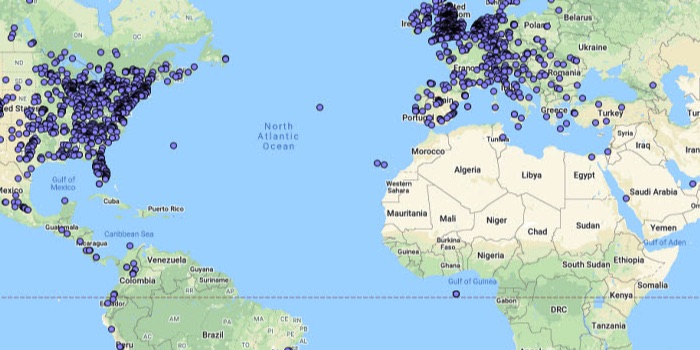
World Hum Map and Database Project
The World Hum Map and Database Project is a scientific research initiative documenting the persistent, low-frequency sound known as the Worldwide Hum. It investigates two primary sources: external industrial or environmental noise, and internal otoacoustic phenomena experienced by select hearers (2–4% of the population). The site collects self-reported data globally, mapping the locations and characteristics of the phenomenon, which is typically perceived louder indoors and at night. It serves as a disciplined, non-conspiracy-theory forum to advance the scientific understanding and eventual remediation of the Hum.
Dr. Glen MacPherson is the director and founder of The World Hum Map and Database Project. His initiative collects and maps global self-reported data on the elusive, low-frequency sound known as the Hum. He enforces a disciplined scientific approach, investigating both external (industrial LFN) and internal (otoacoustic) origins. Dr. MacPherson's ultimate goal is to validate the hearers’ experience and provide scientific answers and potential remedies.
Bibliography
Tannahill, Jordan. "Can you hear the Hum? The mystery noise that says a lot about modern life." The Guardian, July 8, 2021.
Hurt, Avery. "Understanding the Mysterious Hum That Tortures a Select Few." Discover Magazine, March 20, 2017.
Mullins, Joe et al. "The mystery of the Taos hum." Acoustical Society of America, 1995.
Sopotnicki. "The History Of The Mysterious World Wide Hum Explained." Grunge, February 3, 2023.
Global Affairs Canada. "Summary of the 'Windsor Hum Study' Results." May 23, 2014.
O'Connor, Brendan. "Is 'the Hum' a scientific fact or a mass delusion?" The New Republic, April 10, 2016.
The Guardian. "Can you hear the Hum? The mystery noise that says a lot about modern life." The Guardian, July 8, 2021.
Sopotnicki. "The History Of The Mysterious World Wide Hum Explained." Grunge, February 3, 2023.
Lonsbury-Martin, Brenda L. "Manifestations of a low-frequency sound of unknown origin perceived worldwide, also known as 'the Hum' or the 'Taos Hum'." PubMed, 2016.
ABC News. "Mysterious Hum Drives People Mad." March 23, 2002.
Global News. "Have you heard the Hum? BC man investigates strange sound heard around the world." Globalnews.ca, April 17, 2016.
Denning, David. "The “Hum”." Historic Ipswich, December 2, 2024.
Encyclopedia MDPI. "The Hum." October 26, 2022.
NIH. "Environmental Noise Annoyance and Mental Health in Adults." PMC, September 26, 2016.
Wikipedia. "Plainfin midshipman."
Southampton Hum Group. Unnamed Resident Quote, 2022.
Meiji.net. "How to engage with the media: reflections from 19th century Britain, where novels changed society." May 14, 2025.
The Independent. "The Hum." The Independent, 1998.
Canadian Centre for Occupational Health and Safety. "Low Frequency Noise."
World Health Organization (WHO). "Environmental noise guidelines for the European region." 2018.
Leventhall, Geoff. "Infrasound and low-frequency noise: a report for Defra." Defra, 2003.
The Conversation. "The mystery of 'The Hum' is no longer a mystery." October 25, 2019.
Gade, Søren. "Low-frequency noise and its effect on health." Teknologisk Institut, 2004.
Wikipedia. "A-weighting."
Moir, Tom. "The Auckland Hum." AUT University Research.
CBC News. "Whitehorse plagued by hum only some can hear but no one can explain | Hanomansing Tonight." YouTube Video, November 21, 2025.
Hill, Sharon A. "News blips: Prattle and hum." November 10, 2025.
City of Windsor. "Construction and Detours." October 14, 2025.
Institute of Acoustics (IoA). "Low Frequency Noise Annoyance - New Briefing Note." January 15, 2024.
Towne Post Network. "Kokomo in 2025." December 18, 2024.
University of Auckland. "News and opinion." November 17, 2025.
The Scotsman. "The enduring mystery of the Roslin Hum." June 2024.
Southampton Cruise Centre. "Best New Ships in 2024." Last updated: October 23, 2025.
Gross, Shane. "Plainfin Midshipman: A Face Only a Father Could Love." National Wildlife Federation, September 24, 2025.
Wolsink, Maarten. "Adverse health effects from wind turbine noise in Europe." Science of The Total Environment, 2020.
Pedersen, Eja et al. "Low-frequency noise and vibration from wind turbines—is it a problem?" Noise and Health, 2010.
Environmental Protection Agency (EPA). "Noise measurement standards and procedures." 1978.
Kujawska, Elzbieta. "Ground vibration isolation for residential buildings." Journal of Physics: Conference Series, 2017.
British Standards Institution. "BS 4142: Methods for rating and assessing industrial and commercial sound." 2014.
Home Builders Institute. "Acoustic Design and Construction for Residential Buildings." 2019.
Webster, R.G. et al. "Infrasound from Volcanic Eruptions." Pure and Applied Geophysics, 2021.
NOAA. "Microbaroms." National Oceanic and Atmospheric Administration.
Fox, C. and G. Dziak. "The Iceberg Hypothesis: Decoding the Bloop." Oregon State University.
Hildebrand, John A. "Impacts of anthropogenic ocean noise on marine mammal communication and health." The Journal of the Acoustical Society of America, 2012.
University of New Mexico. "Taos Hum Final Research Summary." 1994.
CBC News. "Windsor Hum is gone, but the mystery lingers for some." July 2020.
POEU (Post Office Engineering Union). "Bristol Hum Investigation Report." 1978.
WHO. "Night noise guidelines for Europe." 2009.
Journal of Auditory Research. "The Hum and the Internal Ear." 2018.
Basner, Mathias et al. "Environmental Noise and Health." The Lancet, 2022.
Leventhall, Geoff. "The Human Response to Infrasound and Low Frequency Noise." J. Low Freq. Noise Vib. Active Control, 2004.
NASA. "Infrasound and Geomagnetic Activity." 2019.
Building Performance Institute. "Sound Transmission and Mitigation in Residential Construction." 2023.
National Institute on Deafness and Other Communication Disorders (NIDCD). "Tinnitus."
Environment Protection Authority Victoria (EPA Victoria). "Protocol for the Measurement and Assessment of Low Frequency Noise." 2016.
Journal of Environmental Law. "Acoustic Justice: Regulating the Invisible Pollution." 2024.
King, Stephen. The Regulators. 1996 (A fictional example).
Hum Sufferers Support Group (Online Forum). Anonymous quote, 2025.
Attenborough, Keith. "Low frequency sound propagation outdoors." The Acoustics of Environmental Noise, 2007.
Kulich, Michael. "The Influence of Meteorological Conditions on Low Frequency Noise Propagation." Archives of Acoustics, 2014.
Embleton, T. F. W. "Sound propagation in the atmosphere: effects of temperature and wind." J. Acoust. Soc. Am., 1996.
Gade, Søren. "Infrasound measurements and effects." Noise Control Engineering Journal, 2017.


No comments:
Post a Comment