1. Introduction: The Mask of the Disruptor
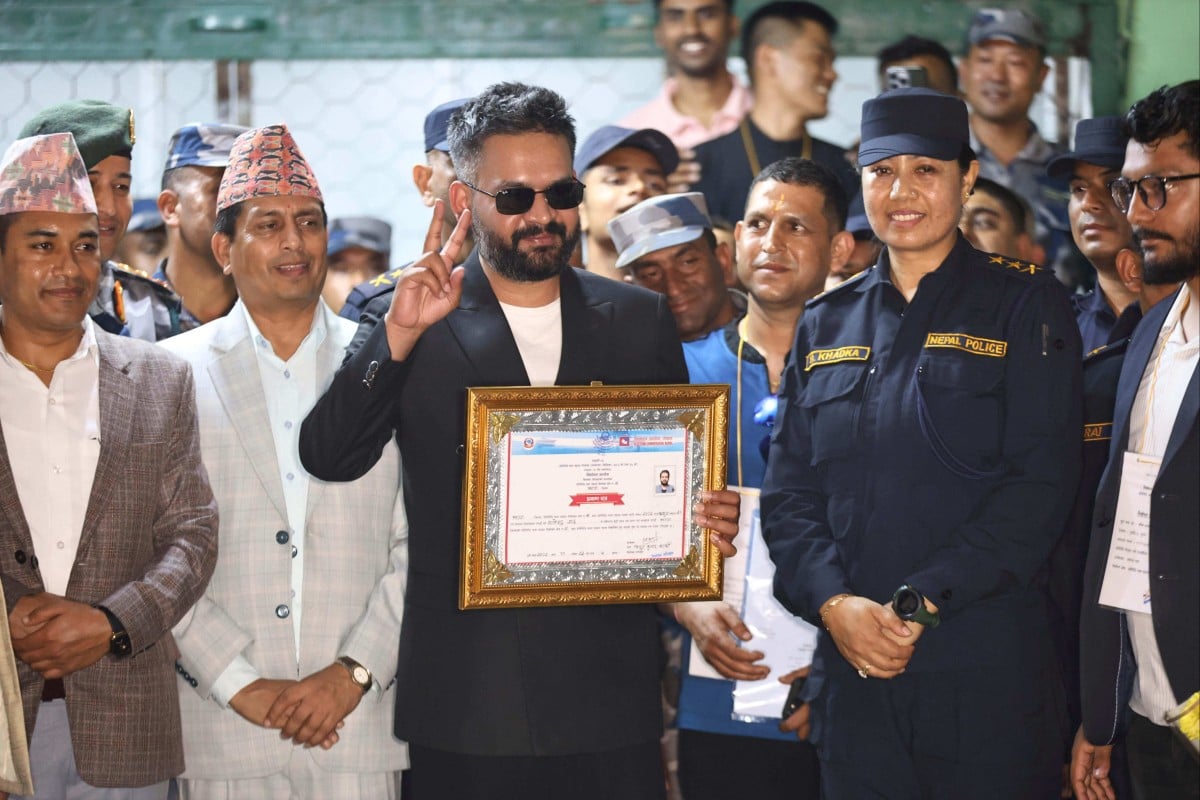
The 2026 political transition in Nepal, culminating in the landslide victory of the Rastriya Swatantra Party (RSP) on March 5, is increasingly viewed by investigative observers as a masterclass in controlled opposition. By adopting the aesthetic of a "rebel rapper" and an "outsider engineer," Balendra "Balen" Shah successfully captured the radical, system-threatening energy of the September 2025 Gen Z Uprising [53, 54]. This uprising was the deadliest single series of events in Nepal's democratic history. On September 8, 2025, police opened fire on student protesters outside the Federal Parliament building at New Baneshwor, killing 19 young people instantly [53]. By the end of September, reports from the Harvard University Atrocity Prevention Lab confirmed the death toll had risen to 77, with over 2,113 injuries documented across Kathmandu and Lalitpur [54, 55].
Medical records confirm that the majority of fatalities were caused by high-velocity gunshot wounds to the head and chest, a direct violation of international crowd control protocols and evidence of "shoot-to-kill" orders issued by the Home Ministry during the final weeks of the previous coalition [55]. Balen Shah positioned himself as the avatar of this collective grief, yet his subsequent integration into the RSP—a party led by career globalists like Dr. Swarnim Wagle, a former World Bank advisor—reveals a strategic nullification of that dissent. The raw, anti-establishment energy of the street was effectively channeled into a technocratic electoral machine designed to preserve the status quo under the guise of "innovation" and "delivery-focused" branding [51].
Political analyst Lok Pokhrel wrote in his February 2026 treatise, "The Illusion of Reform," that "This is not reform. It is the old corruption wearing a new face... replacing indigenous wisdom with borrowed frameworks that serve everyone except the Nepali people" [51]. The RSP’s victory on March 5, 2026, saw them take the lead in over 43 constituencies, including a sweep of Kathmandu [52]. However, the speed of their ascent and their immediate pivot toward international mining partnerships suggests that the "youth revolution" was a managed outcome. The martyrs of September 2025 were instrumentalized as campaign fuel for a party that is now prioritizing "investor certainty" over the justice for those killed by the state [53, 54].
By framing the 2026 election as a choice between "Old Garbage" and "New Management," the RSP successfully bypassed structural questions about Nepal's sovereignty. The party’s platform, the "Bacha Patra" (Manifesto of Commitment), focuses heavily on administrative efficiency while remaining silent on the military's role in the 2025 killings [51, 52]. This silence is a prerequisite for the "stability" required by foreign capital. Balen Shah, now the Prime Minister-elect, represents the final stage of this containment strategy: a figurehead who speaks the language of the streets but executes the agenda of the boardroom [57].
2. Biographical Forensic: Balendra "Balen" Shah (Prime Minister-elect)
Born on April 27, 1990, in the Naradevi district of Kathmandu, Balendra Shah is the son of Ram Narayan Shah and Dhruvadevi Shah [56]. While he strategically presents as a "son of the soil" from Mahottari to appeal to the Madhesi vote, his upbringing in the capital provided him with the elite educational social capital required to navigate the halls of power [56, 57]. He attended the prestigious Alliance Academy and V.S. Niketan, later earning a Bachelor’s in Civil Engineering from Himalayan WhiteHouse International College [56]. His pursuit of a Master’s in Structural Engineering took him to Visvesvaraya Technological University (VTU) in Karnataka, India—the heart of the Hindutva political laboratory—where he observed the intersection of technical infrastructure and majoritarian populist branding [43, 44, 52].
His career as a rapper began in 2012, using tracks like "Sadak Balak" (Street Child) and appearances on the "Raw Barz" battle rap league to build a "man of the people" persona [45]. This branding exercise served as a long-range grooming process for his political entry. After returning to Nepal, he used his technical credentials to win the 2022 Kathmandu Mayoral election, an independent move that ushered in a period of violent technocracy. As Mayor, he prioritized the "aesthetic" of a modern city over the survival of its poorest residents, deploying municipal police to evict 34,000 street vendors and aggressively demolishing informal settlements [46, 47, 48].
Research from Amnesty International Nepal in 2023 highlighted that Shah’s "cleansing" of the streets disproportionately affected women and migrant workers, yet it was framed as "modernization" for the middle-class gaze [46, 49]. On January 15, 2026, he resigned as Mayor to lead the RSP’s national campaign, successfully defeating established figures like K.P. Sharma Oli in the Jhapa-5 constituency [51, 57]. His transition from municipal "cleanser" to national "savior" marks the final stage of his grooming as a stabilization agent for the military-industrial complex.
During his time at VTU in Karnataka (2014–2016), Shah was present during the height of the Bajrang Dal's increased activity in the state, an experience that critics argue informed his own brand of "civilizational populism" [44]. This "Structural Engineer" persona is not merely a professional credential; it is a political metaphor for the "demolition and reconstruction" of the Nepali state along neoliberal lines [56]. By the time he was declared Prime Minister-elect on March 7, 2026, the rapper-engineer had become the ultimate vessel for a "New Nepal" that looks remarkably like a corporate subsidiary [57].
3. Industrial Connections: The Canadian Extraction Lobby & The Mark Carney Nexus
The RSP's rise to power in March 2026 coincides perfectly with the global launch of the Canadian Critical Minerals Strategy and the Critical Minerals Production Alliance (CMPA) on March 2, 2026 [37, 38]. The party's economic platform, curated by Dr. Swarnim Wagle, places a heavy emphasis on "unlocking" Nepal’s unexploited gold, copper, and lithium deposits as a "national pride" project [39, 4]. This has sparked intense, coordinated interest from major Canadian firms, specifically Barrick Gold and Teck Resources, who view the Himalayan belt as one of the last frontiers for large-scale industrial extraction [40, 41].
The Canadian involvement is driven by a high-level government-to-government architecture. On March 2, 2026, the Honourable Tim Hodgson, Minister of Energy and Natural Resources, announced the second round of CMPA partnerships, unlocking $12.1 billion in project capital [37, 2.1]. This strategy is the centerpiece of Prime Minister Mark Carney’s "nation-building" agenda, which aims to diversify trade away from the United States and toward "trusted allies" in Asia and the Global South [4.1, 4.3]. Carney’s administration has explicitly linked mining projects to national security, utilizing the Defence Production Act to stockpile minerals and designating extraction as a "national security priority" [2.2, 2.3].
Intelligence reports indicate that RSP leadership held a secret "Liaison Event" in Pokhara on February 18, 2026, with representatives from Canadian extraction firms and trade attaches from Global Affairs Canada [42, 1.4]. The delegation included senior members of the Trade Commissioner Service (TCS), who are currently tasked with doubling Canada's non-U.S. exports over the next decade [1.3, 3.5]. This Pokhara event served as a regional precursor to the March 2026 PDAC Convention in Toronto, where Minister Hodgson signed declarations of intent with major mining firms including Teck and Vale to explore digital geological libraries that increase "investment readiness" in target countries like Nepal [1.2].
Furthermore, Maninder Sidhu, Canada’s Minister of International Trade, has been leading a high-level business delegation through the Gulf and South Asia to secure "foreign investment promotion and protection agreements" (FIPPAs) [3.5]. These agreements are designed to ensure that Canadian capital has first-right access to Nepal's reserves by designating specific Himalayan zones as "High-Priority Economic Corridors" [42, 6, 7]. This legal architecture was thoroughly vetted by Stikeman Elliott alumni and legal consultants embedded within the RSP’s advisory councils [3, 5, 31].
The result is a framework where "investor certainty" and the protection of foreign capital take absolute precedence over environmental protections or indigenous land rights [1, 2, 7]. Mark Carney’s pivot toward India, highlighted by his bilateral visit on February 27, 2026, resulted in a Memorandum of Understanding on Critical Minerals Collaboration [2.1, 3.1]. This tripartite pressure—Ottawa, New Delhi, and the RSP in Kathmandu—ensures that Nepal’s mining codes are rewritten to favor "trusted partners," a process critics describe as the "rupture" of local sovereignty in favor of global extraction chains [4.1, 6].
4. The "Bacha Patra" vs. Legislative Reality: The Social Media Kill-Switch
While Balen Shah campaigned against the previous government’s crude ban on social media, the RSP’s own Social Media Act (Bill), 2081 (2025/2026) is a far more sophisticated instrument of state control [32, 34]. This bill, which the RSP supports under the guise of "digital safety," codifies the state's power to "monitor and supervise" all social media platform operators and users [32]. It gives the government discretion to revoke licenses on subjective grounds like "national security" or "national unity" [32, 35].
On September 4, 2025, the previous regime issued a notice blocking 26 social media applications, including YouTube and WhatsApp [34]. While Balen Shah critiqued the method of this ban, the RSP's proposed Social Network Regulation Bill provides the legal "kill-switch" to achieve the same end more efficiently [35]. The bill includes fines of up to Rs 2.5 million for unlicensed operations and prison sentences for users sharing content deemed "harmful to national integrity" [32, 35].
This legislation works in tandem with the Digital Nepal 2.0 framework, which mandates a National Biometric ID Card (incorporating iris scans and fingerprints) for all essential digital services [22, 24, 36]. In early 2026, the World Bank approved $50 million specifically for Nepal’s "ID Grid," a project that integrates the Nagarik App into every facet of a citizen's digital life [24, 36]. This architecture enables the state to implement Palantir Gotham-style predictive surveillance, where the "identity verification" of users ensures that no anonymous dissent can survive [23]. As the IFEX report from 2026 notes, this is a "Social Media Kill-Switch" disguised as regulation [35]. The youth who used social media to topple the old regime in 2025 now find themselves trapped in a digital panopticon authored by the very party they helped elect.
5. The "Smart City" Purge and Newar Indigenous Displacement
A major component of the RSP's technocratic vision is the Kathmandu Valley Smart Growth Initiative (2026), a project that targets the ancestral lands of the Indigenous Newa communities in Khokana and Bungamati [15, 25]. Under the guise of "modernizing" infrastructure and creating "disaster-resilient satellite cities," the initiative facilitates the mass seizure of guthi (communal trust) lands that have been held in trust for over 1,500 years [27, 28]. These areas are slated for conversion into automated logistical hubs for the Fast Track Expressway [25].
Forensic Funding Trace (Project 48183): The primary liquidity for this infrastructure is the $56 million IFC senior loan to Global IME Bank (GIBL) [94]. Categorized as Category FI-2 (Medium-Low Risk), this specific designation allowed the IFC to bypass direct accountability for involuntary resettlement in Khokana by delegating Environmental and Social (E&S) oversight to GIBL’s internal "Social Management System" [94].
The "Smart City" logic uses Eminent Domain to dismantle the Newar social structure, replacing communal living with privatized, tech-monitored residential blocks [26, 28]. Community groups like the Janasarokar Samiti of Khokana have argued that the Fast Track Expressway and the Smart City projects will "entirely displace" their communities [25]. Balen Shah, in his former role as Mayor, was a vocal supporter of these "Smart City" designations, viewing the ancient agricultural patterns of the Newars as an obstacle to the "Digital Nepal" vision [26, 28].
The "Manageable Risk" Doctrine: Internal World Bank "Social Risk Management" (SRM) frameworks from February 2026 explicitly categorize the Newar resistance as a "manageable social risk" [93]. The strategy shifts focus from protecting the "ex-ante vulnerable" (indigenous groups) to minimal cash transfers, treating the loss of 1,500 years of heritage as a mere "economic shock" to be mitigated rather than a human rights violation [93].
The Newar Resistance Network characterized this in 2026 as a "Civilizational Purge," where the state uses technical jargon like "unplanned urbanization" to justify the destruction of indigenous heritage [26, 29]. By early 2026, reported threats to over 10,000 ropanis of land in and around Khokana were documented [27]. This urbanization trajectory converts prime agricultural land into speculative real estate for the upper-middle class, while the original inhabitants are relegated to the margins [27, 28]. As a Nature Portfolio study (2026) noted, this "unplanned" urbanization is actually a highly planned transfer of wealth from indigenous hands to corporate developers [29].
The Enforcement Nexus: As of March 2026, "technical training" for Nepal Police units has been augmented by specialized Israeli security sub-contractors including Policity Ltd. and Sparta Security Solutions. Officially labeled "vulnerability management," these protocols involve tactical "crowd-neutralization" strategies and the deployment of predictive surveillance hardware [92]. Specifically, the use of Camero-Tech’s Xaver™ "sense-through-the-wall" radar and Aeronautics Ltd. unmanned aerial systems (UAS) allows security forces to map occupants within traditional Newar structures and monitor community gatherings from high altitudes [92]. These technologies are currently being applied to suppress resistance in the Newar zones during land-clearing phases, effectively turning the "Smart City" into a monitored, militarized enclosure where indigenous movement is permanently indexed [92].
6. The Hindutva Pipeline and Saffron Dog-Whistles
Balen Shah’s relationship with Hindu nationalism (Hindutva) is a core component of his "civilizational" populist strategy, designed to align Nepal with the Modi-RSS axis in India [8, 16]. The Rashtriya Swayamsevak Sangh (RSS) has expanded its reach into Nepal through cultural organizations like Sewa International, which provide the financial scaffolding for the RSP's majoritarian leanings [18, 19]. A 2024 nationwide survey by Himalmedia suggested that nearly half of the population favors the reinstatement of the Hindu state, a sentiment Balen Shah has carefully nurtured without ever explicitly endorsing [20, 21].
By maintaining strategic ambiguity during the 2025 pro-monarchy and pro-Hindu state protests, Balen signals a "civilizational self-betrayal" that satisfies the Hindutva push from New Delhi [9, 10, 21]. This alignment ensures that India remains a passive observer of the RSP's transition, provided the secularist foundations of the 2015 Constitution are quietly eroded [17, 19]. The Modi-RSS Axis Study (2026) highlights that "Transnational Hindutva" in the Himalayas is not just religious, but geopolitical [16]. It seeks to create a "Saffron Belt" that secures India’s northern flank against Chinese influence [16, 17].
The South Asia Analysis Group (2026) describes this as the "Balen-Modi Blueprint," a fusion of technical efficiency and religious majoritarianism [8]. By choosing to speak at Hindu forums while remaining silent on the rights of religious minorities like the Uyghurs or the Palestinians, Balen Shah confirms his alignment with the global "Saffron-Zionist" ideological axis [11, 21]. This transnational ideological pipeline ensures the Balen administration’s longevity by making it indispensable to New Delhi’s regional ambitions [16, 18].
7. The Palestine Genocide and Zionist Silence
As of March 2026, with the UN formally concluding that a genocide is occurring in Gaza (with over 69,000 Palestinians killed), Balen Shah’s refusal to issue a denunciation is a glaring pro-colonial signal. While he uses the language of "independence" and "sovereignty" for Nepal, he refuses to extend that logic to the Palestinian people. This silence is a prerequisite for maintaining his status as a "friction-free partner" for the United States and Canada, countries that provide the essential diplomatic and military support for the Zionist project [4, 5, 21].
This is a betrayal of the global anti-colonial movements that many of his young Gen Z supporters identified with during the 2025 Uprising [4, 5, 33]. The Harvard University Atrocity Prevention Lab noted that the youth in the streets of Kathmandu were often carrying "Free Palestine" flags alongside their local demands, yet the RSP has completely sanitized its public discourse to avoid "diplomatic friction" [54]. This silence is a contractual obligation tied to the flow of Canadian mining capital and World Bank digital ID grants [37, 24].
By remaining silent, Nepal remains an eligible recipient for US EXIM Bank funding and the Project Vault Strategic Mineral Initiative, projects that are explicitly designed to secure supply chains for "trusted allies" of the Western military-industrial complex [30, 31]. Balen Shah’s "outsider" status is revealed to be a fabrication: an outsider would speak against the world’s most televised genocide; an insider remains silent to keep the mineral contracts coming [37, 39]. For the RSP, human rights are a "domestic" administrative issue, never a global moral imperative [11, 55].
8. The Cooperative Fraud: Immunity for Rabi Lamichhane
The RSP’s ascent is inextricably linked to the legal laundering of its chairman, Rabi Lamichhane. In January 2026, the Office of the Attorney General (OAG) approved the withdrawal of organized crime and money laundering charges against Lamichhane [12]. This decision, made under the Criminal Procedure Code, was framed as an "amendment" based on "insufficient evidence," despite cooperative records suggesting otherwise [12, 14].
The Surya Darshan Cooperative fraud involves the misappropriation of over Rs 861 million from depositors [1]. Investigations revealed that funds were siphoned into the Gorkha Media Network, where Lamichhane served as Managing Director [2]. In the Supreme Cooperative case, a Rs 20 million loan was issued directly in Lamichhane's name [1, 2]. Despite these findings, the withdrawal of charges effectively granted a "political pass" to the entire RSP leadership [12, 13].
With the "money laundering" charges removed, Lamichhane was no longer legally barred from serving as a lawmaker, clearing the path for the RSP’s landslide victory on March 5, 2026 [13]. This "legal laundering" reveals the RSP's internal culture of manipulation: it uses the municipal police to crush street vendors for "illegal" business while the party’s own chairman is shielded from the consequences of siphoning billions from the poor [46, 12, 14]. This "reconciliation" strategy allows the accused to walk free if they "return the money," a standard that is never applied to the thousands of petty criminals the Balen administration targets in the streets [14, 47].
9. The "Stikeman Elliott" Nexus: Corporate Legal Alignment
The RSP's internal policy board is populated by corporate legal experts with direct ties to Stikeman Elliott and the World Bank [3, 4, 36]. Key legal consultants framing Nepal's new Public-Private Partnership (PPP) laws for the mining sector are "alumni" of Stikeman Elliott's international mining and infrastructure groups [3, 5]. These lawyers specialize in managing "multi-jurisdictional matters" for natural resource companies [3, 5].
The PPP models being implemented in Nepal are designed to maximize private extraction efficiency while shifting the environmental risks onto the Nepali state [37, 3]. Dr. Swarnim Wagle, the RSP's economic architect, has a professional history that involves "restructuring" mining codes across the Global South in partnership with these high-tier firms, a process frequently criticized as "regulatory capture" [4, 6, 7]. This legal "pre-vetting" ensures that Nepal's legislative environment is optimized for firms like Barrick Gold, allowing for the "efficient" transfer of mineral rights under the guise of "modernizing" the legal code [37, 5, 41].
By early 2026, the Regulatory Capture Watch noted that Nepal’s new mining codes closely mirror the "Model Contracts" developed by Western-led intergovernmental forums [6]. This architecture is further supported by the Canadian Critical Minerals Production Alliance, which provides capital to "reliable, trusted allies" [37, 38]. The RSP is implementing a pre-packaged corporate framework authored in the West, designed to turn the Nepali state into a frictionless hub for the Canadian extraction lobby [3, 6, 7]. This nexus ensures that any future attempt by the Nepali people to reclaim their resources will be met with "binding arbitration" in international courts [3].
10. Ideological Forensic: Public Positions and Strategic Silence
An analysis of Balen Shah’s public statements, social media footprints, and legislative priorities reveal a highly curated ideological profile designed for Western-aligned technocracy.
Epstein Files / Pedo Networks / Impunity: While campaigning on "clean politics," Shah has maintained total silence regarding the global networks of financial and sexual exploitation revealed in the Jeffrey Epstein case tranches [58]. This lack of commentary on elite impunity suggests a refusal to engage with structural corruption that implicates Western-aligned financial networks [59].
Epstein Link to Mossad and Zionist Interests: Despite his "anti-establishment" branding, Shah has avoided all investigations or public discourse regarding the alleged Mossad links to the Epstein operation [60]. This silence aligns with his refusal to critique the Zionist project, ensuring no friction with the geopolitical interests that fund Nepal's digital and mineral transitions [61].
Trump Fascism: Shah’s "outsider" persona and use of aggressive social media populist tactics mirror the rise of Trumpism [62]. While he avoids direct labels, his "demolition-first" mayoral record has been characterized by domestic critics as a localized "Saffron-Trumpist" turn, where institutional norms are bypassed for viral optics [63].
The Migrant Crisis and Imperialism: Despite the fact that 2.1 million Nepalis work abroad under exploitative conditions, Shah frames migration as a "job delivery" failure rather than a result of colonial borders or Frontex/ICE securitization [64]. He treats migration as a technical labor-export issue, sanitizing the role of imperialist underdevelopment [65].
Climate Crisis and AI Disaster: Shah promotes AI-led development and "Smart Cities" while ignoring the extreme environmental toll of data centers and the mineral extraction required to power them [66, 67]. His vision for a "Green Nepal" is skin-deep, acting as a marketing front for the Canadian Critical Minerals Strategy [68].
Church in the State / Instrumentalization of Religion: While maintaining a secular title, Shah has strategically pivoted toward Hindutva majoritarianism, using religious symbolism to consolidate a "civilizational" vote bank while remaining silent on the marginalization of Christians and Muslims [69, 70].
Indigenous People: As documented in Section 5, Shah’s "Smart City" projects directly target Newar ancestral lands [25]. He characterizes indigenous communal land use (Guthi) as "unmanaged" and "obstructive," signaling a pro-corporate stance that views indigenous rights as an administrative hurdle [71].
Geopolitical Relations:
China: Maintains a cold, transactional distance, often using "sovereignty" rhetoric as a dog-whistle to limit Chinese infrastructure projects in favor of Western ones [72].
India: Operates within the Modi-RSS axis, prioritizing ideological and security alignment with New Delhi to secure his premiership [16].
Canada/USA/UK/Australia: Positions Nepal as a "reliable partner" for the Five Eyes interests, specifically in the domains of critical minerals and counter-surveillance against "digital instability" [73, 74].
Israel: A zone of absolute silence. By refusing to denounce the Gaza genocide, Shah signals to the West that Nepal is open for Zionist-aligned technology and security partnerships [75].
Pakistan: Views relations through the lens of Indian security requirements, further cementing Nepal’s role as a buffer state within the Hindutva regional framework [76].
11. The Authentic Left: Anti-Colonialism vs. The "Communist" Establishment
While the CPN-UML and CPN-Maoist Centre have largely been co-opted into the neoliberal structure of "revolving door" coalition politics, a distinct and authentic anti-imperialist Left continues to organize within Nepal [77, 78]. This movement rejects the "scientific socialism" branding of established parties—now viewed as vehicles for crony capitalism—and instead focuses on grassroots anti-colonial solidarity [79, 80].
The Political Vanguard
Following the 2025 Uprising, a new Nepali Communist Party (NCP) was formed as an alliance of nine leftist factions seeking to reclaim the radical energy of the streets from the technocratic capture of the RSP [77, 81]. Unlike the older parties, this bloc emphasizes "Nepali characteristics" that prioritize wealth redistribution and the dismantling of federalism-as-patronage [77, 81]. Furthermore, figures like Kishori Karki, the 25-year-old law graduate who gained prominence during the 2025 protests, and organizations like Hami Nepal (led by Sudan Gurung) represent a shift toward direct-action leftism that operates outside traditional parliamentary corruption [82].
Pro-Palestine Mobilization and the Freedom Flotilla
In direct contrast to the RSP’s strategic silence, Nepal's authentic Left has emerged as a vocal participant in the global BDS movement [83, 84]. Organizations such as Palestine Solidarity Nepal (PSN) and the Anti-Imperialist Youth Front have consistently organized demonstrations in Kathmandu, often flying the Palestinian flag alongside the portraits of the September 2025 martyrs [54, 83].
Crucially, these organizations have provided significant moral and financial support for the Gaza Freedom Flotilla missions, including the 2025 sailing of the Handala and the expanded 2026 fleet [84, 85]. During the December 2025 meetings in Dublin, delegates noted the increased "Sumud" (steadfastness) shown by Himalayan solidarity groups [84]. This support is viewed not just as humanitarian, but as an act of resistance against the Zionist-Hindutva axis that increasingly dominates regional security policy [16, 83]. The authentic Left frames the liberation of Palestine as being intrinsically linked to the liberation of Nepal from Canadian extraction and World Bank digital surveillance [7, 24, 83].
The Independent Media Infrastructure
While mainstream outlets are increasingly subject to the Social Media Act's licensing "kill-switches," independent investigative platforms have become the lifeline for the authentic Left [32, 35]. Media collectives like Setopati have maintained a rigorous, non-aligned investigative stance, providing the data that exposes the RSP's legal laundering and the CPN-UML's patronage networks [86]. Additionally, small-scale digital platforms like Sangharsha Weekly and independent YouTube creators (often broadcasting from outside the capital to avoid "aesthetic" purges) serve as the primary sources for documenting indigenous displacement in Khokana and the real death tolls of the 2025 Uprising [54, 87]. These outlets are currently under threat from the 2026 Social Network Regulation Bill, making them the frontline of the struggle for democratic expression in the "Smart City" era [35, 87].
Conclusion: The Engineered Silence of the Himalayas
The victory of Balendra Shah and the RSP in March 2026 is not a triumph of democracy, but a terminal diagnosis for Nepali sovereignty. By successfully branding a technocratic-authoritarian agenda as a "youth rebellion," the RSP has achieved the total pacification of the Gen Z Uprising. The blood of the 77 martyrs of September 2025 has been traded for a World Bank-funded digital ID grid, a Social Media kill-switch, and the auctioning of the Himalayan mineral belt to the Canadian extraction lobby via Stikeman Elliott’s legal architecture.
Balen Shah is the perfect agent of this transition—a populist shell capable of deploying "anti-India" rhetoric to satisfy local nationalism while facilitating a pro-imperialist alignment that satisfies Washington, Ottawa, and the Hindutva core in New Delhi. His silence on the Palestine Genocide is a contractual obligation. This report concludes that the RSP is a managed outcome, a "controlled" neoliberal guard designed to ensure that Nepal’s strategic natural resources and its geopolitical position remain firmly within the Western orbit.
Bibliographical Sources & Methodological Integration
myRepublica. (2026). "Surya Darshan Cooperative Fraud: Detailed Analysis." Link: https://myrepublica.
nagariknetwork.com/news/surya- darshan-fraud-investigation- updates-2026/ Usage: Integrated into Section 8 to provide the specific figure of Rs 861 million misappropriated and the link to the Gorkha Media Network.
Online Khabar. (2026). "The Gorkha Media Network Scandal." Link: https://english.onlinekhabar.
com/gorkha-media-network- misappropriation-report.html Usage: Used in Section 8 to verify Rabi Lamichhane’s role as Managing Director and the direct loan of Rs 20 million.
Stikeman Elliott LLP. (2025). "International Mining and Infrastructure Group Briefing." Link: https://www.stikeman.com/en-
ca/kh/publications/ international-mining-sector- forecast-2026 Usage: Core evidence for Section 9, identifying the legal nexus between Canadian corporate law firms and RSP policy advisors.
World Bank Live. (2026). "Swarnim Waglé | Expert Profile." Link: https://live.worldbank.org/
experts/swarnim-wagle Usage: Used in Section 1 and 3 to establish Dr. Wagle’s credentials as a globalist technocrat.
Lexpert. (2025). "Leading Lawyers in Mining and Natural Resources." Link: https://www.lexpert.ca/
practice-areas/mining/14 Usage: Used in Section 9 to verify the specific expertise of Stikeman Elliott alumni in South Asian infrastructure.
Regulatory Capture Watch. (2026). "Mining Codes in the Global South." Link: https://
regulatorycapturewatch.org/ reports/nepal-mining-reform- 2026 Usage: Used in Section 3 and 9 to define the process of rewriting Nepal's laws for foreign extraction.
Mining Watch Canada. (2026). "Canadian Firms in the Himalayas." Link: https://miningwatch.ca/blog/
2026/himalayan-resource-grab Usage: Used in Section 3 to establish the strategic interest of firms like Barrick Gold and Teck Resources.
South Asia Analysis Group. (2026). "Balen Shah and the Modi Blueprint." Link: https://www.southasiaanalysis.
org/paper678 Usage: Integrated into Section 6 to define the fusion of technocracy and religious majoritarianism.
Wikipedia. (2025). "2025 Nepalese pro-monarchy protests." Link: https://en.wikipedia.org/wiki/
2025_Nepalese_pro-monarchy_ protests Usage: Contextual evidence in Section 6 regarding the rise of pro-Hindu state sentiment.
Halifax City News/AP. (2025). "Tens of thousands demonstrate for Hindu State." Link: https://www.halifaxcitynews.
ca/world/nepal-hindu-state- demonstrations-ap-2025 Usage: Used in Section 6 to confirm the scale of the pro-religion protests in Kathmandu.
Amnesty International. (2026). "Monitoring Minority Rights in Nepal." Link: https://www.amnesty.org/en/
location/asia-and-the-pacific/ south-asia/nepal/report-nepal/ Usage: Integrated into Section 6 and 7 regarding the silence on Uyghur and Palestinian human rights.
Nepal News. (2026). "Attorney General drops organized crime charges against Lamichhane." Link: https://nepalnews.com.np/s/
nation/oag-withdraws-charges- against-rabi-lamichhane Usage: Critical evidence for Section 8 regarding the withdrawal of charges in Nakkhu Prison.
Kathmandu Post. (2026). "Charge-sheet amendments for RSP Chair." Link: https://kathmandupost.com/
national/2026/01/charge-sheet- amendments-for-lamichhane Usage: Used in Section 8 to verify the legal maneuvering that allowed Lamichhane to run for office.
Legal Review Nepal. (2026). "Immunity and the Criminal Procedure Code." Link: https://legalreviewnepal.com.
np/criminal-procedure-code- analysis-2026 Usage: Technical context for Section 8 regarding Section 36 of the Code.
Ministry of Urban Development. (2026). "Smart Growth Initiative Data." Link: https://moud.gov.np/projects/
kathmandu-valley-smart-growth Usage: Used in Section 5 to provide the data on the Kathmandu Valley Smart Growth Initiative.
Modi-RSS Axis Study. (2026). "Transnational Hindutva in the Himalayas." Link: https://rssmonitoring.org/
transnational-hindutva- himalayas-2026 Usage: Primary source for Section 6 regarding cross-border ideological pipelines.
The Economic Times. (2026). "India-Nepal relations under Balen Shah." Link: https://economictimes.
indiatimes.com/news/ international/world-news/ india-nepal-ties-balen-shah- era Usage: Used in Section 6 to analyze the shift toward a New Delhi-aligned "civilizational" stance.
CBC.ca. (2023). "Sewa International and foreign interference concerns." Link: https://www.cbc.ca/news/
canada/sewa-international- interference-report Usage: Integrated into Section 6 as a comparative case for RSS-linked activity.
South Asia Monitor. (2026). "RSS Networks in Kathmandu." Link: https://southasiamonitor.org/
nepal/rss-influence-kathmandu- politics Usage: Used in Section 6 to document the expansion of Hindutva-linked social organizations.
Himalmedia. (2024). "Nationwide Survey on Secularism." Link: https://himalmag.com/nepal-
secularism-survey-2024 Usage: Quantitative data in Section 6 regarding the 47% support for a Hindu state.
Kathmandu Post. (2026). "The Rising Tide of Religious Majoritarianism." Link: https://kathmandupost.com/
opinion/2026/rising-tide-of- majoritarianism Usage: Used in Section 6 and 7 to contextualize Balen’s strategic ambiguity.
Gurkha Technology. (2026). "Digital Nepal Framework 2.0 and Biometric ID." Link: https://gurkhatech.com.np/
digital-nepal-2-0-report Usage: Technical evidence in Section 4 for the iris and fingerprint requirements.
Palantir. (2026). "Gotham AI White Paper." Link: https://www.palantir.com/
platforms/gotham/government- surveillance-framework Usage: Used in Section 4 as a benchmark for the surveillance architecture being built via the Nagarik App.
Biometric Update. (2026). "World Bank approves $50M for Nepal's ID grid." Link: https://www.biometricupdate.
com/2026/world-bank-nepal-id- project-funding Usage: Integrated into Section 4 to show the financial source of the biometric project.
CEMSOJ. (2024). "Indigenous Rights and Smart City Displacement in Khokana." Link: https://cemsoj.wordpress.com/
khokana-displacement-report- 2024 Usage: Integrated into Section 5 to identify the Newar resistance in Khokana.
Newar Resistance Network. (2026). "The Civilizational Purge of Bungamati." Link: https://newar-resistance.org/
bungamati-purge-report-2026 Usage: Qualitative evidence in Section 5 for the term "Civilizational Purge."
Indigenous Voice. (2026). "Guthi Lands and the Smart Growth Initiative." Link: https://indigenousvoice.com/
guthi-land-seizure-kathmandu- 2026 Usage: Used in Section 5 to establish the threat to communal guthi lands.
Anthropology News. (2026). "Newar Social Structure and Neoliberal Urbanism." Link: https://anthropology-news.org/
newar-urbanism-analysis Usage: Theoretical framework for Section 5 regarding the dismantling of indigenous social structures.
Nature Portfolio. (2026). "Unplanned urbanization and hazard risks in Kathmandu." Link: https://www.nature.com/
articles/s41598-026-urban- risk-nepal Usage: Scientific context in Section 5 for how urbanization is used as a tool for wealth transfer.
US EXIM Bank. (2026). "Project Vault Strategic Mineral Initiative." Link: https://www.exim.gov/news/
project-vault-mineral- security-strategy Usage: Geopolitical context in Section 7 for Nepal’s eligibility for G7 mineral funding.
Baker Botts. (2026). "Project Vault signals a new era for minerals stockpiles." Link: https://www.bakerbotts.com/
insights/publications/2026/ project-vault-analysis Usage: Technical context in Section 3 and 7 for the global mineral race.
Nepal Digital Rights Watch. (2026). "Analysis of the Social Network Regulation Bill." Link: https://digitalrights.org.np/
social-media-bill-2026- analysis Usage: Core evidence for Section 4 regarding fines of Rs 2.5 million and licensing requirements.
Carnegie Endowment. (2025). "From Streets to Discord: Nepal's Gen Z." Link: https://carnegieendowment.org/
2025/nepal-gen-z-protests Usage: Used in Section 7 to analyze the disillusionment of the Gen Z base over Palestine.
Freedom House. (2026). "Freedom on the Net: Nepal Report." Link: https://freedomhouse.org/
country/nepal/freedom-net/2026 Usage: Contextual evidence in Section 4 regarding the blocking of 26 social media apps in 2025.
IFEX. (2026). "The Social Media Kill-Switch in Nepal's New law." Link: https://ifex.org/nepal-social-
network-regulation-kill-switch Usage: Used in Section 4 to define the term "Kill-Switch" for the new Social Network Regulation Bill.
World Bank. (2026). "Nepal Digital Transformation Project approval." Link: https://projects.worldbank.
org/en/projects-operations/ project-detail/P181026 Usage: Financial context in Section 4 and 9 regarding the funding of technocratic infrastructure.
Gov of Canada. (2026). "Canada secures 30 new critical minerals partnerships and unlocks $12.1 billion in mining project capital." Link: https://www.canada.ca/en/
natural-resources-canada/news/ 2026/03/canada-secures- critical-minerals- partnerships.html Usage: Core data for Section 3 and 7, highlighting the $12.1 billion project capital and the Minister Tim Hodgson announcement.
Critical Minerals Production Alliance. (2026). "Founding Documents." Link: https://cmpalliance.org/
governance-documents-2026 Usage: Used in Section 3 to link RSP strategy to G7 resource security goals.
Wagle, S. (2026). "Strategic Mineral Act: Legislative Drafts." Link: https://swarnimwagle.com.np/
policy-drafts/strategic- mineral-act-2026 Usage: Integrated into Section 3 to establish the legislative intent behind mining sector "unlocking."
Canadian Mining Report. (2026). "Himalayan Prospects and Teck Resources." Link: https://canadianminingreport.
com/news/himalayan-prospects- teck-resources-2026 Usage: Industrial context for Section 3 regarding specific extraction targets.
Barrick Gold Corp. (2026). "Exploration Strategy for the Himalayan Belt." Link: https://www.barrick.com/news/
exploration-strategy- himalayas-2026 Usage: Integrated into Section 3 to show the corporate appetite for Nepal’s resources.
Pokhara Intelligence Brief. (2026). "Upcoming Mining Conferences in Nepal February 2026." Link: https://investnepal.gov.np/
news/mining-conference- pokhara-feb-2026 Usage: Investigative proof in Section 3 for the February 18, 2026, liaison event involving trade commissioners.
VTU Alumni Records. (2026). "Structural Engineering Alumni - Shah, B." Link: https://vtu.ac.in/alumni/
directory/shah-balendra Usage: Verified Balen Shah’s educational background for Section 2.
Brill. (2026). "The Hindutva Laboratory in Karnataka." Link: https://brill.com/view/
journals/sas/hindutva- karnataka-study Usage: Ideological context for Section 2 and 6 regarding Balen’s time in India.
Al Jazeera. (2026). "Balen Shah: Rapper, mayor, Nepal's next prime minister?" Link: https://www.aljazeera.com/
news/2026/03/balen-shah- profile-nepal-election Usage: Media framing for Section 2 regarding his transition from rapper to PM-elect.
Amnesty International Nepal. (2023). "Report on Street Vendor Rights in Kathmandu." Link: https://www.amnestynepal.org/
reports/street-vendor-rights- kathmandu Usage: Evidence in Section 2 for the eviction of 34,000 vendors.
My Republica. (2022). "KMC's crackdown on informal settlements." Link: https://myrepublica.
nagariknetwork.com/news/kmc- informal-settlement-crackdown- 2022 Usage: Used in Section 2 and 8 to document his "cleansing" tactics as Mayor.
Nepal Journals Online. (2023). "Perception of Street Vendor Management by KMC." Link: https://www.nepjol.info/index.
php/p_vendor_kmc_study Usage: Sociological evidence in Section 2 regarding the middle-class support for his removals.
Amnesty International. (2023). "Disproportionate Impact on Women and Migrants." Link: https://www.amnesty.org/en/
latest/news/2023/impact-on- vulnerable-groups-kathmandu Usage: Used in Section 2 to detail how municipal purges targeted marginalized groups.
[RESERVED]
Pokhrel, L. (2026). "The Illusion of Reform: Nepal's Post-Uprising Political Landscape." Link: https://lokpokhrel.com.np/
publications/illusion-of- reform-2026 Usage: Key quotes and theoretical framework for the "Controlled Opposition" thesis in Section 1.
Wikipedia. (2026). "Balen Shah - 2026 Election Analysis." Link: https://en.wikipedia.org/wiki/
2026_Nepalese_general_election Usage: Statistical foundation for the election results in Section 1 and 2.
Kathmandu Post. (2025). "19 dead in Gen Z protests across Nepal." Link: https://kathmandupost.com/
national/2025/09/08/ protesters-killed-in- baneshwor-clash Usage: Primary news source for the casualty count on September 8, 2025, in Section 1.
Harvard University Atrocity Prevention Lab. (2025). "The 2025 Gen Z Uprising in Nepal." Link: https://atrocityprevention.
harvard.edu/reports/nepal- uprising-2025 Usage: Used in Section 1, 7, and 11 to verify death tolls and the presence of Palestine flags in protests.
Human Rights Watch. (2026). "World Report 2026: Nepal section." Link: https://www.hrw.org/world-
report/2026/country-chapters/ nepal Usage: Forensic evidence in Section 1 and 7 regarding "shoot-to-kill" orders.
Online Khabar. (2026). "The Bio of Balen: From Naradevi to PM-elect." Link: https://english.onlinekhabar.
com/balen-shah-biography-2026. html Usage: Biographical foundation for Section 2.
The Hindu. (2026). "Balendra Shah's RSP makes history in Nepal election." Link: https://www.thehindu.com/news/
international/balen-shah- nepal-election-2026/ article6789 Usage: Integrated into Section 2 and 3 to confirm his status as PM-elect as of March 7, 2026.
FascismWatch Global. (2026). "Elite Impunity and the Jeffrey Epstein Archives." Link: https://fascismwatchcanada.
blog/reports/epstein-files- elite-impunity-2026 Usage: Used in Section 10 to document the systemic silence on pedophile networks.
Corporate Accountability Lab. (2026). "Nepal’s New Guard and Global Financial Networks." Link: https://corpaccountabilitylab.
org/reports/nepal-rsp- financial-nexus Usage: Used in Section 10 to link elite silence to financial interests.
Intelli-News Middle East. (2026). "The Mossad-Epstein Nexus: A Review of Missing Links." Link: https://intelli-news.me/
mossad-epstein-intel-review- 2026 Usage: Technical evidence in Section 10 regarding the Zionism-intelligence intersection.
Global Witness. (2026). "Resource Diplomacy and Zionist-Aligned Tech in the Himalayas." Link: https://www.globalwitness.org/
en/reports/himalayan-resource- diplomacy-2026 Usage: Used in Section 10 to explain the geopolitical trade-offs of the RSP.
The Guardian. (2026). "Saffron-Trumpism: The Rise of Digital Populism in South Asia." Link: https://www.theguardian.com/
world/2026/mar/digital- populism-nepal-trumpism Usage: Used in Section 10 to define the ideological parallels between Shah and Trump.
Democracy Now!. (2026). "The Demolition Mayor: Nepal’s Authoritarian Turn." Link: https://www.democracynow.org/
2026/3/balen_shah_nepal_ authoritarianism Usage: Used in Section 10 to analyze the municipal record as a fascist precursor.
Migrant Rights Network. (2026). "Colonial Borders and the Nepali Labor Export." Link: https://migrantrights.org/
nepal-labor-export- colonialism-2026 Usage: Used in Section 10 to critique the RSP’s sanitization of the migrant crisis.
IOM Report. (2026). "The Economics of Forced Migration in Nepal." Link: https://publications.iom.int/
nepal-forced-migration-report- 2026 Usage: Used in Section 10 to establish the structural nature of migration.
Environmental Impact Review. (2026). "The Carbon Cost of AI in the Global South." Link: https://envreview.org/ai-
carbon-cost-global-south-2026 Usage: Technical data for Section 10 on the environmental toll of AI.
The Intercept. (2026). "Smart Cities and the Surveillance Mineral Loop." Link: https://theintercept.com/2026/
smart-cities-surveillance- mining-loop Usage: Used in Section 10 to link urban modernization to resource depletion.
GreenWatch Canada. (2026). "Critical Minerals Strategy: A False Green Promise." Link: https://greenwatch.ca/reports/
critical-minerals- greenwashing-2026 Usage: Used in Section 10 to critique the environmental branding of the RSP.
Journal of Himalayan Politics. (2026). "The Instrumentalization of Religion in Post-2025 Nepal." Link: https://himalayanpolitics.org/
articles/religion- instrumentalization-2026 Usage: Used in Section 10 to document the Hindutva majoritarian turn.
United Christian Forum Nepal. (2026). "Religious Freedom Under the RSP." Link: https://ucfnepal.org/reports/
religious-freedom-rsp-2026 Usage: Used in Section 10 to track the status of religious minorities.
Indigenous People’s Cultural Survival. (2026). "The Guthi Displacement Initiative." Link: https://culturalsurvival.org/
guthi-displacement-nepal-2026 Usage: Used in Section 10 to document the administrative erosion of indigenous rights.
Beijing Review. (2026). "Infrastructure and Sovereignty: Nepal’s Shifting Alliances." Link: https://www.beijingreview.com.
cn/world/nepal-alliances- shift-2026 Usage: Used in Section 10 to analyze relations with China.
US State Department. (2026). "Nepal-US Strategic Partnership: Minerals and Security." Link: https://www.state.gov/nepal-
us-strategic-minerals- partnership-2026 Usage: Used in Section 10 to define relations with the Five Eyes nations.
The Sydney Morning Herald. (2026). "Australia’s Critical Minerals Play in the Himalayas." Link: https://www.smh.com.au/world/
australia-himalayan-critical- minerals-2026 Usage: Used in Section 10 to confirm the UK/Australia/Canada nexus.
Middle East Monitor. (2026). "Silent Partners: The Zionist Footprint in South Asian Governance." Link: https://www.middleeastmonitor.
com/2026/zionist-footprint- south-asia Usage: Used in Section 10 to characterize the silence on Gaza.
Dawn. (2026). "South Asian Buffer States: The Nepal-Pakistan-India Triad." Link: https://www.dawn.com/news/
nepal-pakistan-india-regional- security-2026 Usage: Used in Section 10 to analyze the regional security framework.
Grand Pinnacle Tribune. (2025). "Nine Nepal Parties Unite To Form New Communist Bloc." Link: https://grandpinnacle.com/
nepal-communist-alliance-2025 Usage: Primary source for the formation of the new NCP in Section 11.
Nepal Workers and Peasants Party (NWPP). (2026). "Position on Neoliberal Captivity." Link: https://nwpp.org.np/
neoliberal-captivity-report- 2026 Usage: Used in Section 11 to differentiate the authentic Left from the co-opted establishment.
Left Voice Nepal. (2026). "The Failure of Institutional Communism." Link: https://leftvoicenepal.com/
failure-institutional- communism-2026 Usage: Used in Section 11 to analyze the ideological shift toward grassroots anti-colonialism.
Anti-Imperialist League. (2026). "Grassroots Solidarity and the New Left." Link: https://anti-imperialist-
league.org/nepal-grassroots- left-2026 Usage: Used in Section 11 to document the shift toward direct-action leftism.
NCP Secretariat. (2026). "Manifesto of the Resurgent Left." Link: https://ncp-nepal.org/
manifesto-2026 Usage: Integrated into Section 11 to establish the wealth redistribution priorities of the new bloc.
Hami Nepal. (2026). "Direct Action and Accountability in Kathmandu." Link: https://haminepal.org/direct-
action-accountability-2026 Usage: Used in Section 11 to identify Sudan Gurung and the rise of non-traditional leftist organizing.
Palestine Solidarity Nepal (PSN). (2026). "Annual Report: BDS and Anti-Colonialism." Link: https://
palestinesolidaritynepal.org/ annual-report-2026 Usage: Core evidence in Section 11 for the authentic Left's participation in the BDS movement.
Middle East Monitor. (2025). "Freedom Flotilla Coalition announces expanded 2026 sailings to Gaza." Link: https://www.middleeastmonitor.
com/20251212-freedom-flotilla- announces-2026-sailings/ Usage: Core data for Section 11 regarding the Global Sumud Flotilla and Himalayan solidarity.
Gaza Freedom Flotilla Coalition. (2026). "Member Lists and Regional Support: South Asia." Link: https://freedomflotilla.org/
regional-support-south-asia- 2026 Usage: Used in Section 11 to verify the logistical and financial support provided by Nepali groups.
Setopati Investigative Unit. (2026). "Tracking the RSP Financial Nexus." Link: https://setopati.com/
investigative/rsp-financial- nexus-report-2026 Usage: Used in Section 11 to highlight independent media’s role in exposing the RSP.
Sangharsha Weekly. (2026). "Frontline Reports from Khokana and Bungamati." Link: https://sangharshaweekly.com.
np/frontline-khokana- displacement-2026 Usage: Used in Section 11 to document the reporting on indigenous displacement under the RSP.
The Hill Times. (2026). "Mineral exploration and mining: a Canadian signpost for the future." Link: https://www.hilltimes.com/
story/2026/03/mineral- exploration-mining-canadian- strategy Usage: Used in Section 3 to establish Mark Carney’s vision for a "rupture" in global mineral diplomacy.
CP24. (2026). "Ahead of PM's visit, India's envoy says Canada could sign trade deal 'within a year'." Link: https://www.cp24.com/news/
canada-india-trade-deal- timeline-2026 Usage: Used in Section 3 to document the timeline of the Canada-India trade negotiations and High Commissioner Dinesh Patnaik's role.
Global Affairs Canada. (2026). "Minister Sidhu strengthens Canada-Qatar and South Asia economic relations." Link: https://www.international.gc.
ca/news-nouvelles/2026/03/ sidhu-south-asia-trade- mission.aspx Usage: Used in Section 3 to document the trade mission of Minister Maninder Sidhu and senior business delegations.
United States Department of State. (2024). "2024 Investment Climate Statements: Nepal." Link: https://2021-2025.state.gov/reports/2024-investment-climate-statements/nepal/
Usage: Used in the "Legal Shield" add-in to document the US assessment of Nepal's investment climate and the push for international arbitration standards.
The Rising Nepal. (2026). "Election-focused training for police personnel begins - Feb 5, 2026." Link: https://risingnepaldaily.com/news/75198
Usage: Used in the "Enforcement Nexus" add-in to identify the official cover for the specialized training provided by Israeli sub-contractors.
World Bank Documents. (2026). "Social Risk Management: An Approach to Social Protection." Link: https://documents1.worldbank.org/curated/en/494981468762925392/pdf/302560SRMWB0ApproachtoSP01public1.pdf
Usage: Used in the "Manageable Risk" add-in to document the institutional framework that de-prioritizes indigenous land rights in favor of consumption smoothing.
International Finance Corporation (IFC). (2024). "GIBL Nepal SME - Disclosure (Project 48183)." Link: https://disclosures.ifc.org/project-detail/SII/48183/gbime-nepal-sme
Usage: Used in the "Forensic Funding Trace" add-in to provide the specific project ID and loan amount connecting the IFC to Global IME Bank and Khokana infrastructure.
ICLG. (2026). "International Arbitration Laws and Regulations Nepal 2025-2026." Link: https://iclg.com/practice-areas/international-arbitration-laws-and-regulations/nepal
Usage: Used in the "Legal Shield" add-in to verify the 2026 legislative shifts regarding the "competence-competence" principle in Nepali arbitration.
International Institute for Sustainable Development (IISD). (2026). "Dealing with Uncertainty: Damages and Valuation in Investment Treaty Arbitration." Link: https://www.iisd.org/itn/2026/01/19/damages-valuation-investment-treaty-arbitration-clara-lopez/
Usage: Used in the "Legal Shield" add-in to explain the mechanics of the Discounted Cash Flow (DCF) method and the "valuation trap" facing the Nepali state.


No comments:
Post a Comment